A year ago today, we incorporated GLAM. It started as a hackathon project built on a shared frustration: manual work, operational friction, and too many intermediaries between managers and their investors. What began as a prototype became an opportunity we couldn't ignore. Today we give professional managers the granular controls they need and the onchain speed they should have had all along.
The vision was straightforward: lower the barriers for managers to launch strategies and for investors to access professional-grade products. We are building what we wished had existed when we were running funds ourselves.
What We Built
The road from hackathon to production took longer than we expected. It required iterations we did not foresee, architectural decisions we debated endlessly, and problems we only discovered by building real integrations and operating through real edge cases.
At its core, GLAM has two components: the Vault and the Mint. The Vault is a smart account that enables fine grained permissions. It lets managers delegate specific functions to different keys, automate strategies with proper security controls, and maintain institutional grade access management. The Mint is a tokenization layer that computes portfolio value across enabled protocols, prices positions, and issues tokens against NAV. It functions as an automated transfer agent and fund administrator.
One of our most significant decisions was moving to a modular architecture. Rather than building a monolithic program that requires constant updates, we designed a system of extension programs. Separate, audited integrations can be added without touching the core protocol. This was not about elegance for its own sake. We want the core protocol to harden and stabilize over time, while new integrations remain explicit extensions of a vault’s trusted surface that can be evaluated independently.
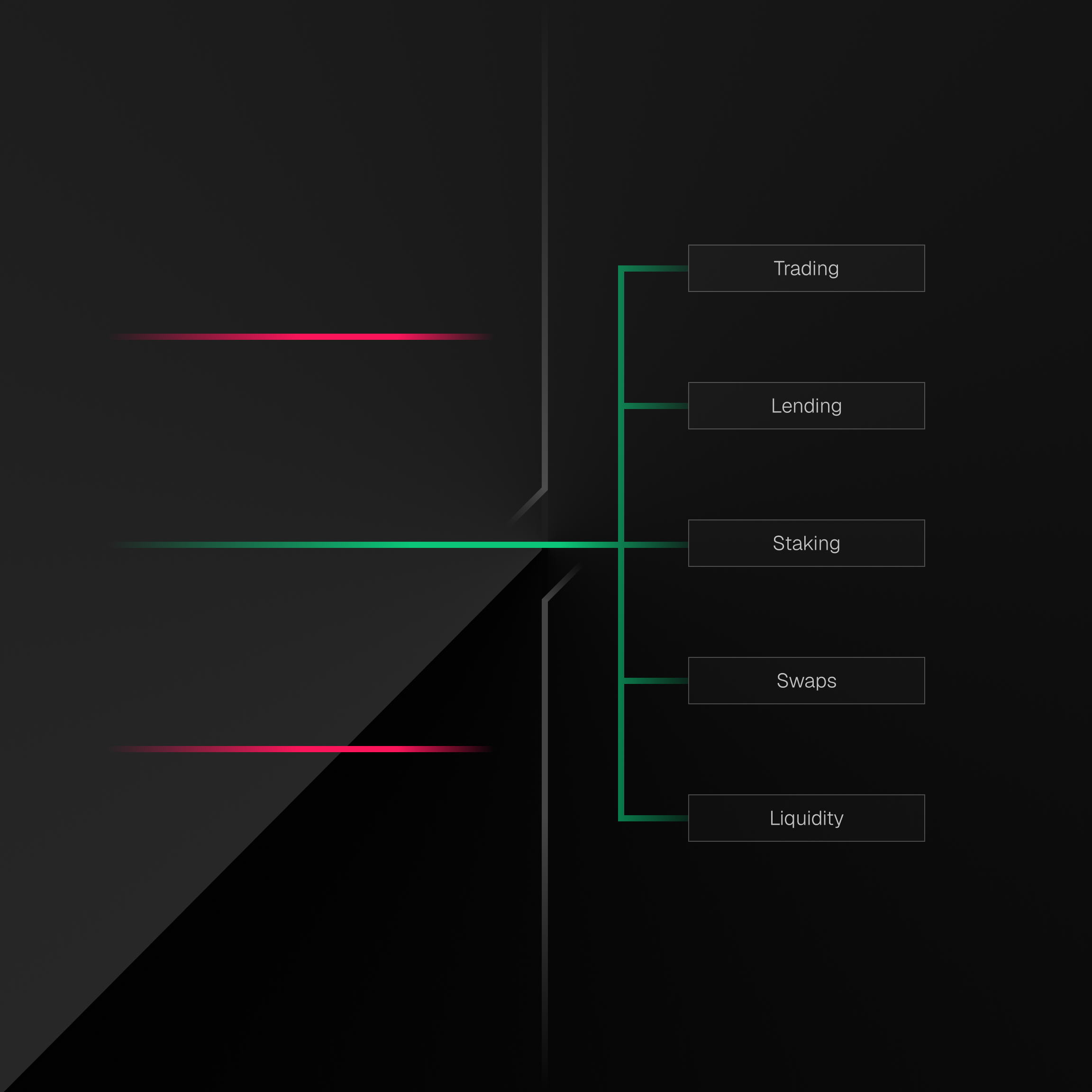
Building connectivity to the broader DeFi ecosystem required deep integration work across multiple protocols. Each one brought its own challenges: different account structures, varying transaction patterns, and edge cases in pricing and execution. We built connections across lending markets, trading venues, liquid staking protocols, and more. Each integration expands what managers can do from within a single vault.
Security as the Starting Point
Early on, we made a decision that shaped everything after: security and trust are primary differentiators. We want to build a protocol where the attack surface can be systematically reduced, where permissions follow the principle of least privilege, and where emergency response capabilities are built in from the start.
What is already in production includes timelocks and notice periods that bring traditional finance safeguards to onchain operations, granular permission systems where delegates can only perform explicitly authorized actions, emergency response capabilities with multiple levels of pause and recovery options, and policy hierarchies that enforce constraints at the vault, integration, and parameter levels.
The goal we keep coming back to is simple: even if a delegate key is compromised, minimize the damage through onchain protections.
What This Looks Like for a Manager
A manager can run an operation where execution, controls, and reporting are designed to work together. A typical setup looks like this: The manager runs a vault that can interact with multiple protocols through a single interface. A trading key is permitted to rebalance within defined markets and size limits. An operations key can handle routine maintenance actions that should not require full administrative authority. Tokenization is enabled so investors can subscribe and redeem through standardized mechanics. Policies enforce what markets, assets, and actions are permitted, and time based controls ensure sensitive actions cannot happen instantly. The point is not just automation, it is making automation governable.
Where We’re Going
The market is starting to align with what we have been building. Onchain asset management will not stay a niche, it is becoming a primary venue for capital allocation.
Our near term focus is depth over breadth. Enhanced oracle protections with TWAP integration and reference price deviation guardrails. More granular policy controls with stricter hierarchy enforcement. Rate limiting to protect against compromised keys, expanded integration coverage for major DeFi protocols, and improved data services for real time and historical performance tracking.
Looking further out, we see ourselves at the intersection of several converging trends. Asset managers should not be confined to single protocols, and we are building for a world where capital can move seamlessly as opportunities emerge. As traditional finance increasingly turns to onchain strategies, the infrastructure has to meet institutional expectations for security, compliance, and operational controls. At the same time, as the tokenization of offchain assets accelerates, custody, attestation, and pricing requirements will become more demanding. Our architecture is designed to meet those requirements as they arrive.
The Inflection Point
GLAM is built by a team that has worked together for over a decade, across traditional asset management and blockchain systems. One year in, we have moved from conviction to production as the market enters a decisive inflection point.
As we noted in our Vaultcast 2026 blog post, independent analysts are converging on the same expectation: onchain vault AUM will grow meaningfully in 2026. The speculative era is ending, and the focus is shifting to distribution and scale. GLAM is designed for this moment, and the infrastructure is ready to carry the category forward.